Unlocking the Universe: Frontiers of Scientific Exploration

Dive into the latest breakthroughs that are reshaping our understanding of the cosmos, life, and everything in between.

Abstract representation of scientific data visualizations with glowing nodes and lines connecting them

Latest in Science

Artist's impression of a distant exoplanet with a ring system

Cosmic Whispers: New Insights from the James Webb Space Telescope

The James Webb Space Telescope continues to deliver unprecedented views of the universe, revealing the formation of early galaxies and the atmospheric composition of distant exoplanets, pushing the boundaries of astrophysics and astrobiology.

Read More
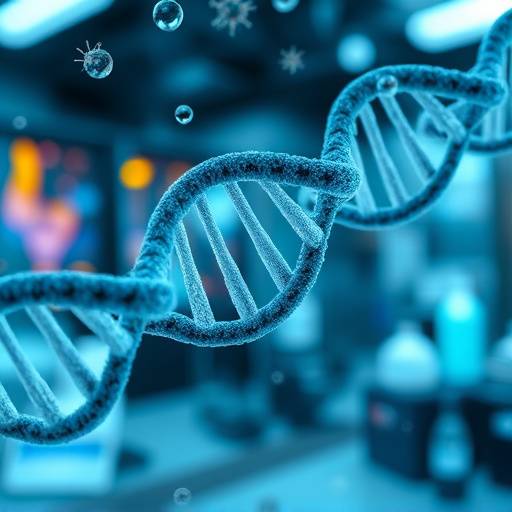
Microscopic view of a gene editing process using CRISPR technology

CRISPR's Next Chapter: Revolutionizing Gene Therapy

Advancements in CRISPR-Cas9 technology are paving the way for novel treatments for genetic diseases, from sickle cell anemia to cystic fibrosis. Researchers are refining delivery methods and improving precision to unlock the full therapeutic potential.

Read More

A scientist observing microscopic organisms in a laboratory setting

Microbiome Mysteries: The Gut-Brain Connection Explained

Emerging research highlights the profound influence of the gut microbiome on human health, impacting everything from mood and cognition to immune response. Scientists are exploring targeted interventions to optimize this complex ecosystem.

Read More
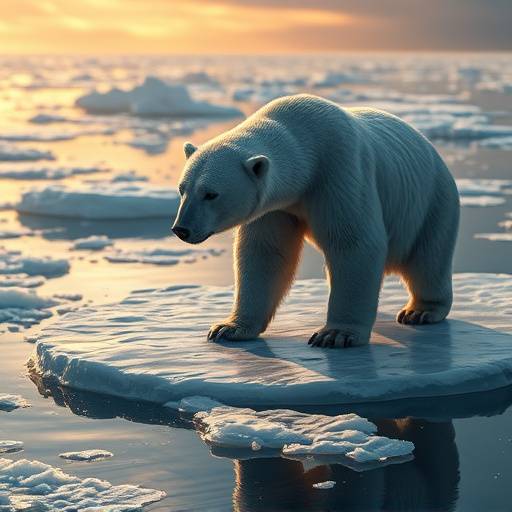
A polar bear on a melting ice floe, symbolizing climate change impacts

Climate Resilience: Innovations in Carbon Capture and Sustainable Energy

As the planet warms, innovative solutions for carbon capture and the development of next-generation renewable energy sources are becoming critical. This article explores promising technologies that could mitigate climate change.

Read More

Complex geometric shapes representing theoretical physics concepts

Quantum Leap: Exploring the Fabric of Reality

From quantum entanglement to the search for a unified field theory, theoretical physics continues to challenge our fundamental understanding of the universe. We delve into the latest hypotheses and experimental pursuits.

Read More

A medical team performing robotic surgery with advanced equipment

Precision Medicine: Tailoring Treatments for Individual Health

The era of one-size-fits-all medicine is evolving. Precision medicine leverages genetic information, lifestyle data, and advanced diagnostics to create personalized treatment plans, improving efficacy and reducing side effects.

Read More

Research Highlights

Exoplanet Atmosphere Analysis

Recent spectral analysis of exoplanet WASP-96b, conducted by the JWST, has provided a clear signature of water vapor and evidence of clouds and haze. This marks a significant step in our ability to characterize worlds beyond our solar system.

Learn More About WASP-96b

AI in Drug Discovery

Artificial intelligence is accelerating the identification of potential drug candidates. Machine learning algorithms are sifting through vast molecular databases, predicting efficacy and toxicity with remarkable speed, potentially reducing drug development timelines by years.

Discover AI in Medicine

Expert Insights

Dr. Aris Thorne on the Future of Fusion Energy

"We are on the cusp of a new energy era," states Dr. Aris Thorne, lead physicist at the Dublin Institute for Advanced Studies. "The recent breakthroughs in sustained fusion reactions are not just theoretical; they represent a tangible path towards clean, virtually limitless energy for generations to come. The engineering challenges remain significant, but the fundamental physics are now undeniable."

"The pursuit of fusion energy is a marathon, not a sprint, but the finish line is now in sight."

Dr. Thorne's team is focused on plasma confinement techniques and advanced materials science to overcome the remaining hurdles. Their work at the institute is supported by international collaborations, underscoring the global effort to harness this powerful energy source.

Professor Maeve Kelly on Biodiversity Conservation

Professor Maeve Kelly, a leading environmental scientist at University College Dublin, emphasizes the urgent need for action. "The current rate of species extinction is alarming. Our work in agroecology and habitat restoration is crucial not just for preserving individual species, but for maintaining the intricate web of life that sustains our planet. We need to integrate ecological principles into every aspect of our land use and development planning."

"Protecting biodiversity is synonymous with protecting our own future."

Professor Kelly's research often involves fieldwork across Ireland's diverse landscapes, from the Burren's unique flora to the coastal ecosystems of the Wild Atlantic Way. Her advocacy calls for stronger policy frameworks and increased public awareness.

Science Explained

What is Dark Matter?

Dark matter is a hypothetical form of matter that is thought to account for approximately 85% of the matter in the universe. It does not emit, absorb, or reflect light, making it invisible to electromagnetic detection. Its existence is inferred from its gravitational effects on visible matter, such as the rotation of galaxies and the bending of light (gravitational lensing).

Scientists are actively searching for direct and indirect evidence of dark matter particles using various experiments, including particle detectors deep underground and space-based observatories. The nature of dark matter remains one of the biggest mysteries in modern physics.

// Hypothetical dark matter detection scenario
function detectDarkMatterEvent(particleInteraction) {
    if (particleInteraction.energy > 100 && particleInteraction.type === 'weakly_interacting') {
        console.log("Potential dark matter candidate detected!");
        return true;
    }
    return false;
}

The Principles of Gene Editing

Gene editing technologies, such as CRISPR-Cas9, allow scientists to make precise changes to DNA. The CRISPR system acts like molecular scissors, guided to a specific location in the genome where it can cut the DNA. This cut can then be repaired by the cell in a way that disables a gene, corrects a mutation, or inserts a new sequence. This technology holds immense promise for treating genetic disorders but also raises ethical considerations regarding its application.

The ability to edit genes opens up new avenues for understanding gene function and developing novel therapies. Ethical frameworks are continuously being developed to guide responsible research and application of these powerful tools.